

MINTYFI PRODUCT FAMILY / AI-ASSISTED MONITORING
Sentry See your infrastructure.Understand the event.Start in the right place.
Sentry is an AI-assisted infrastructure and service monitoring platform in Minty Yazılım’s Mintyfi product family.
A device being up does not mean the work is flowing. See connectivity, services and logs in context; focus your investigation with AI.
- Capture the signal
- Correlate with AI
- Verify with people
- Retain the knowledge
NOT JUST AN ALERT. AN INCIDENT STORY.
“The server is up. Why have orders stopped?”
Follow the monitoring, AI and team sides of the same incident. Sentry’s difference is not generating more signals; it is turning the available signals into a focused investigation.
Illustrative incident · not live data
THE VALUE OF THIS STEP
The user’s problem gets a technical counterpart.
“The system is down” becomes an incident with a target, a time and a check result.
THE VALUE OF THIS STEP
Focus on the relevant layer instead of checking everything.
AI summarizes evidence and possible causes together. Network and application teams discuss the same incident.
THE VALUE OF THIS STEP
The task reaches the right team with its context.
People see which check to perform and why, verify the findings and choose the intervention themselves.
THE VALUE OF THIS STEP
Knowledge stays with the team, not one person.
At shift handover, share not just an alert, but what was checked, what was decided and the recorded outcome.
01 / SIGNAL
The device is reachable. The service is not responding.
Server reachability and the REST check return different results. The incident brings together the start time and records from the same window.
- Server access
- Reachable
- Order API
- No response
- Syslog
- Application error
02 / AI CONTEXT
Scattered findings. A shared investigation direction.
The server remains reachable while the API is not responding. Related application errors support reviewing the service layer first, rather than a general network outage.
AI ASSESSMENT
The server is reachable while the API does not respond. Application errors in the same time window support starting at the service layer rather than investigating a general network outage.
03 / TEAM DECISION
Sentry suggests. Your team verifies and decides.
Check the application service state and recent changes. Network reachability alone does not confirm a healthy application.
A CHECK FOR YOUR TEAM TO VERIFY
Check the application service state and recent changes.
Investigation direction ready · team decides
04 / TEAM MEMORY
The next incident should not be a fresh start.
Investigation steps, operator notes and verified outcomes remain in incident history. Compare earlier records when similar symptoms return.
INVESTIGATION RECORD
- The device is reachable. The service is not responding.
- Sentry suggests. Your team verifies and decides.
- The next incident should not be a fresh start.
AI analyzes findings and suggests checks. Verification and infrastructure intervention decisions remain with your team.
From the device to the service your customer uses.
Not disconnected checks. Different layers of the same incident.
- Network & ports
- Servers & hardware
- Services & APIs
- 802.1X / MAB
- Certificates & domains
- Syslog & incidents
FROM TECHNICAL FINDINGS TO TEAM VALUE
Less uncertainty.A more connected way to work.
Sentry’s value is not another screen. It is understanding the same incident together.
-

AI-generated illustrative field scene 01
Focus the investigation
BEFORE
“Is it the network or the application?”
WITH SENTRY
Layer-specific checks and an AI summary.
An evidence-led starting point, not random checks.
-

AI-generated illustrative field scene 02
Bring the team into context
BEFORE
Separate screens, interpretations and incomplete handovers.
WITH SENTRY
Checks, syslog and incident history together.
Hand over a task with findings, not just its alert.
-

AI-generated illustrative field scene 03
Turn repetition into experience
BEFORE
A shift change loses the earlier investigation.
WITH SENTRY
Operator notes and outcome records remain available.
A similar incident does not mean starting over.
IN YOUR OPERATIONS
One approach. Different workflows.
A checkout, a guest and a production line face different problems. Investigation should keep that business context.
THE VISIBLE PROBLEM
Payment is waiting at checkout
When the card payment service stops responding, the store team only sees that the transaction has stalled.
THE INVESTIGATION DIFFERENCE
Sentry separates network reachability from the REST check, helping the technical team start at the right layer.
THE VISIBLE PROBLEM
Sensor data goes quiet
A production line may appear to run while MQTT messages from a sensor group stop, affecting quality tracking.
THE INVESTIGATION DIFFERENCE
Connectivity and message flow are monitored together, making the start of the loss visible.
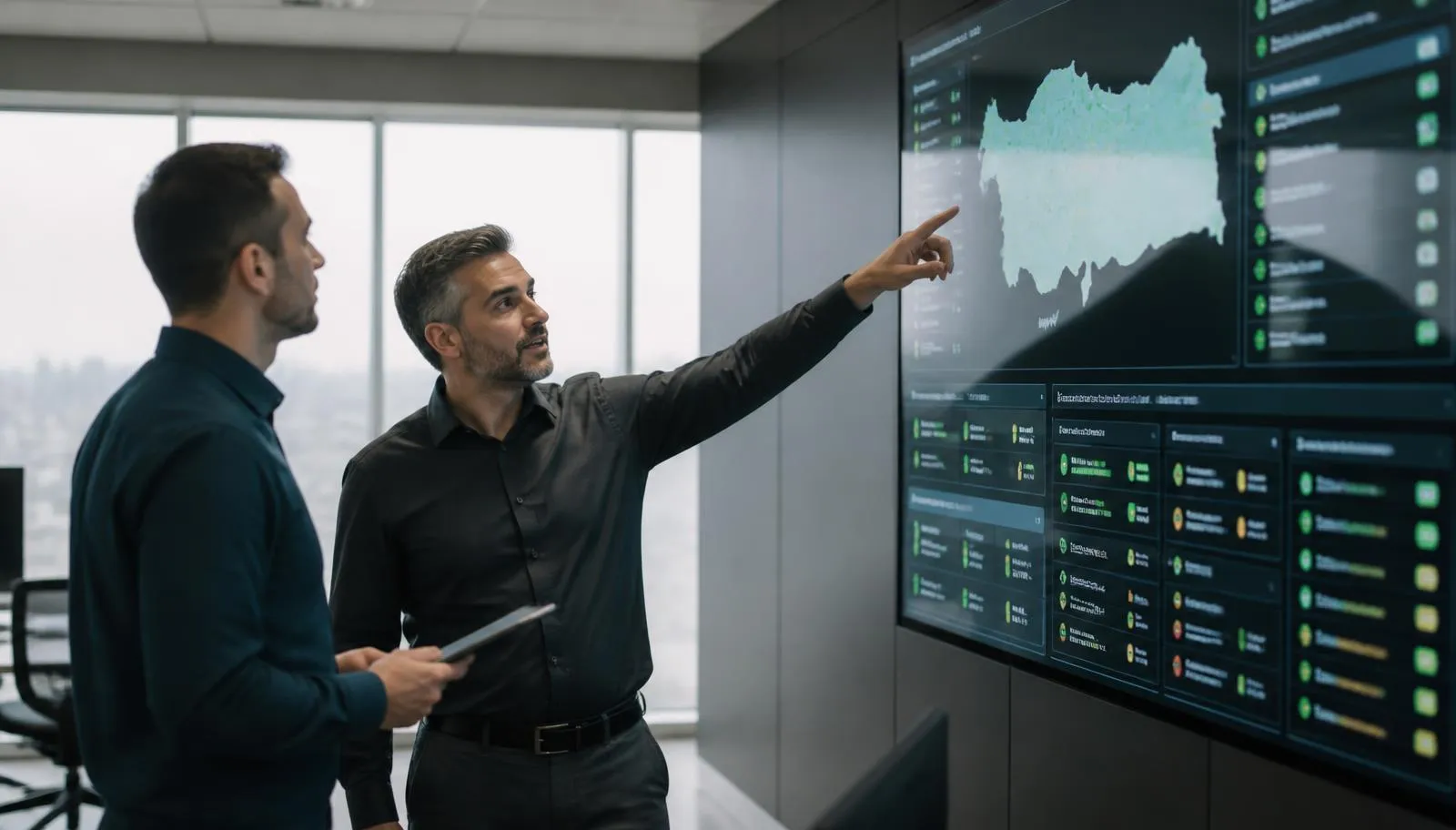
THE VISIBLE PROBLEM
The same issue across branches
Recurring connection drops may look like separate support tickets, hiding the common pattern.
THE INVESTIGATION DIFFERENCE
Branch incidents are gathered in one history so recurring targets and times can be compared.

THE VISIBLE PROBLEM
802.1X validation is delayed
Even with valid credentials, network authentication can take longer than expected or time out.
THE INVESTIGATION DIFFERENCE
RADIUS response, connection result, and latency appear in one test flow; possible investigation points remain separate from verified evidence.
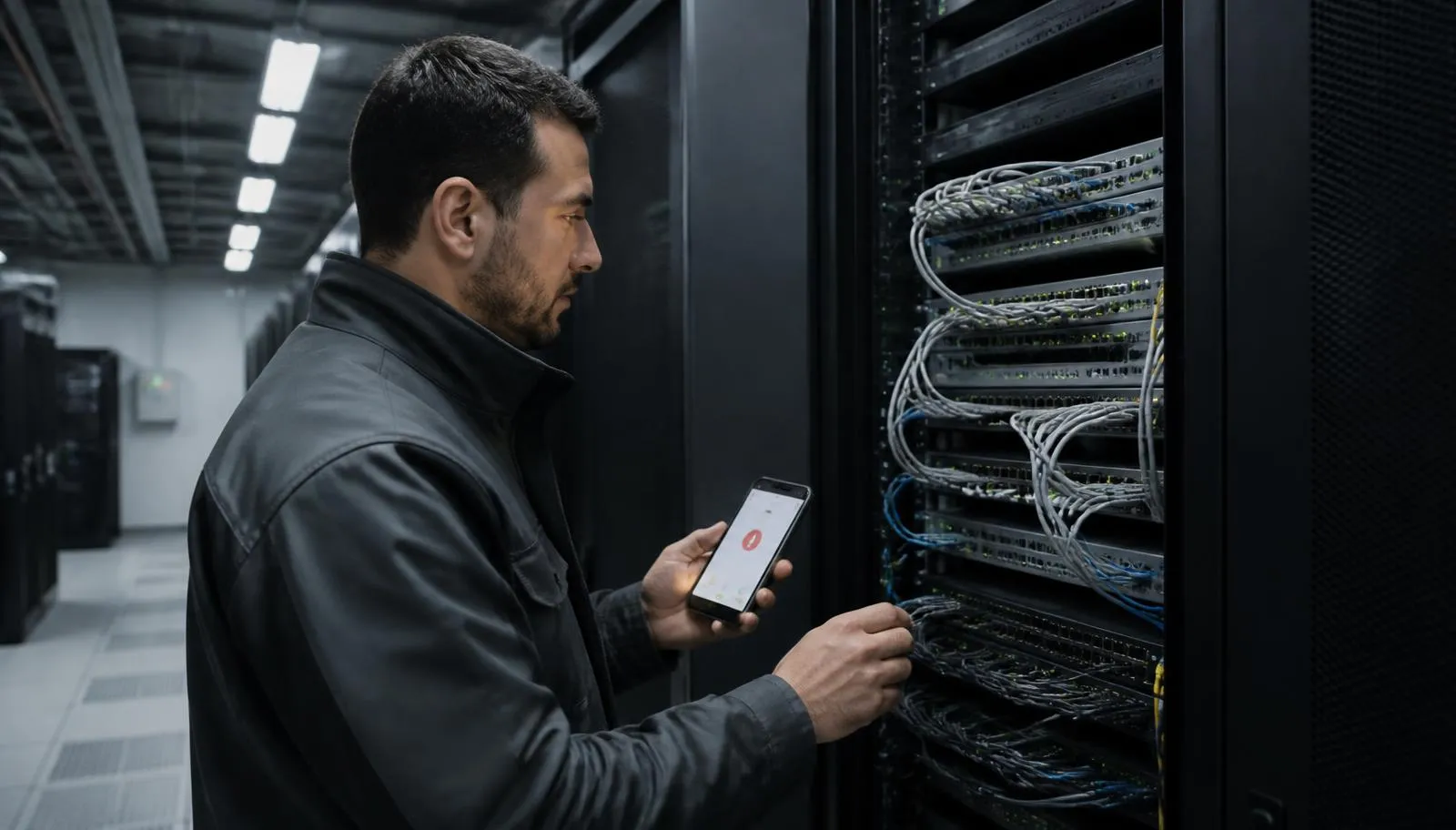
THE VISIBLE PROBLEM
Server up, service down
The operating system may be reachable while the port used by the application is not responding.
THE INVESTIGATION DIFFERENCE
Server reachability, TCP port, and service checks are monitored as separate layers so the team starts in the right place.
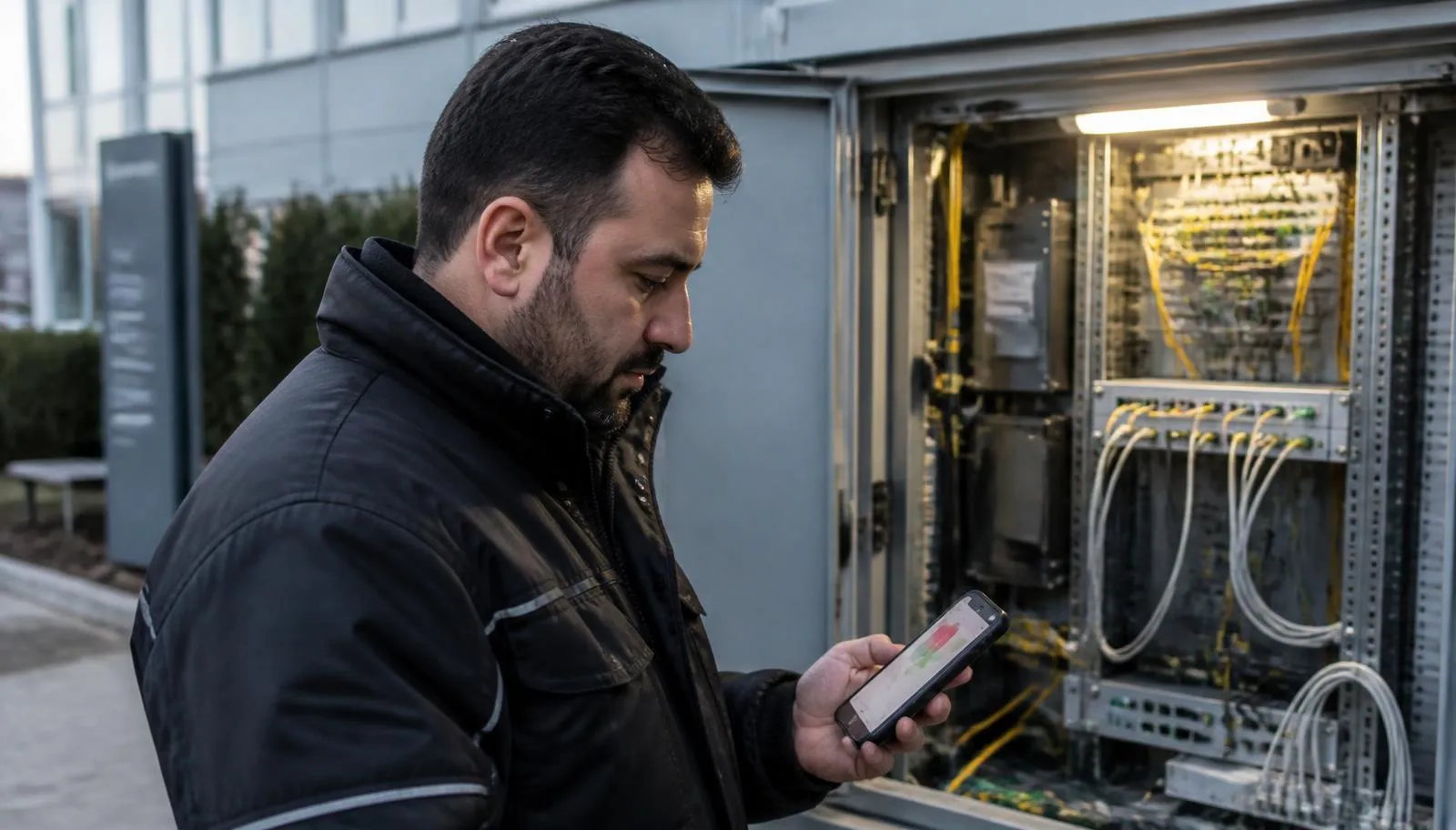
THE VISIBLE PROBLEM
Certificate expiry is approaching
A working service can become unexpectedly unavailable when its certificate or domain expires.
THE INVESTIGATION DIFFERENCE
SSL/TLS certificate and domain expiry dates are tracked by days remaining, with warning before renewal is due.
Before you decide.
What does Sentry do?
It connects to the devices, servers, and services you define at regular intervals; detects access loss, tracks certificate and domain expirations, summarizes incidents together with syslog records, and suggests review steps.
Are AI suggestions applied automatically?
No. AI produces an incident summary, likely causes, and suggested steps. The operator decides which step to apply and applies it themselves.
Do you predict outages in advance?
No. Sentry detects access loss as it happens and generates early warnings for certificate/domain records approaching expiry.
Can you monitor devices on my private network?
Sentry needs to be able to reach the relevant network. This is achieved either by defining suitable network access or by installing a local connectivity component; we work together to determine the right method for your environment.
Which monitoring methods are supported?
Ping, TCP port, SNMP, REST, WebSocket, SSH, MQTT, and RADIUS-based checks, plus authentication checks on supported services. We need to confirm together that a specific device or metric is supported.
Do syslog records replace legal log retention?
No. Operational syslog sources are used for incident review; they do not replace legal log compliance or a SIEM solution.
Do devices found by scanning start being monitored automatically?
No. Discovered devices are first listed as pending candidates. The device type guess and confidence percentage are a suggestion; a candidate is added to inventory and assigned a monitoring type only after operator approval.
What does the confidence score on incidents mean?
The confidence score is a priority indicator showing how clear the signal behind the incident is. It doesn't express certainty about the root cause; review is still carried out by the operator.
Where is our data stored and who can access it?
Monitoring records, incident history, and syslog data are kept in separate customer areas; access is restricted through role-based authorization. The hosting region (Turkey or the EU) is determined together with you before setup and defined in writing in the contract.
Which documents do you share for compliance with data protection regulations?
Before contracting, we share a data processing agreement (DPA), a list of processed data categories, a sub-processor list, and a retention periods table. Current versions of these documents will also be published on this page once they clear legal review.
What permissions does Sentry operate with on our network?
Checks are limited to the defined targets and only to the necessary protocols. Credentials are stored encrypted, no action outside of checks is performed, and no device is automatically modified.
How is pricing determined?
Based on the number of devices/services to monitor and your usage needs. We share current pricing on request.
THE NEXT STEP
Let’s start with an incidentfrom your infrastructure.
Review the devices, services and team workflows you want to monitor together. Identify where Sentry can provide visibility and investigation context.
Explore the scopeA monitoring plan that fits your needs
- 01Number of targets to monitor
- 02Check types and frequency
- 03Usage needs
Email: sales@mintyfi.com
Security and compliance
What comes up in enterprise procurement
These topics are subject to technical and legal verification before contracting. Published versions of the documents are shared on request until they're finalized; no service-level (SLA) commitment is made on this page.
-
01 Data security
TLS in transit, encryption at rest; credentials are kept in a separate secret store. Access is role-based and administrative actions are written to an audit log.
-
02 Data protection compliance
A data processing agreement (DPA), processed data categories, sub-processor list, and retention periods are shared in writing before contracting.
-
03 Hosting region
Hosting can be configured in Turkey or the EU region. The selected region is determined before setup and defined in the contract.
-
04 Network access
Monitoring a private network requires either suitable access to be defined or a local connectivity component. Scope, ports to be opened, and permissions are verified together before setup.
Data security, data-protection compliance documents, and hosting region are shared in writing before contracting. Published versions of commercial and legal documents have not been added yet.